Video suggested by Victoria Salgado:
Sources:
youtube.com
ryanatallah.com
2 Nov 2015

1 Nov 2015
Struggle for power
Explain:
- How Stalin came to power in Communist Russia in 1924.
- Why Stalin, and not Trotsky, emerged as Lenin's successor.


Life in Lenin's Russia
Life improved for many ordinary people in Lenin's Russia. But Russia was now a dictatorship and anyone who openly criticised Communism risked losing their life.
Five aspects of the communist state
The Bolsheviks wanted to set up a Communist state. This comprised five aspects:
- Peace - as promised, Lenin made the Treaty of Brest-Litovsk with Germany although it meant that Russia lost vast amounts of its best industrial and agricultural land in Poland and the Ukraine.
- Communist economy - the Bolsheviks gave the land previously owned by the nobles to the peasants, and factories were handed over to workers' committees.
- Communist laws - the Bolsheviks banned religion; brought in an eight-hour day for workers, as well as unemployment pay and pensions; abolished the teaching of history and Latin, while encouraging science; and allowed divorce.
- Communist propaganda - there was a huge campaign to teach everyone to read. Agit trains' went around the country showing communist newsreels and giving lectures to teach peasants about Communism.
- Dictatorship - Lenin dismissed the Constituent Assembly, which was the parliament that the Provisional Government had arranged, and declared the 'dictatorship of the proletariat' (which was really, the dictatorship of Lenin). A secret police force called the Cheka arrested, tortured and killed anybody who tried to destroy the Communist state.
Test yourself:
Source: http://www.bbc.co.uk/schools/gcsebitesize/history/mwh/russia/lifeinleninsrussiarev1.shtml


Nazi Persecution
Hitler had firm racial policies and believed that non-Germans should not have any citizenship rights. There were many groups of people who were targeted by Hitler's policies, but none more so than the Jews.
Who did the Nazis persecute?
The Nazis believed that only Germans could be citizens and that non-Germans did not have any right to the rights of citizenship.
The Nazis racial philosophy taught that some races were untermensch (sub-human). Many scientists at this time believed that people with disabilities or social problems were genetic degenerates whose genes needed to be eliminated from the human bloodline.
The Nazis, therefore:
- Tried to eliminate the Jews.
- Killed 85 per cent of Germany's Gypsies.
- Sterilised black people.
- Killed mentally disabled babies.
- Killed mentally ill patients.
- Sterilised physically disabled people and people with hereditary diseases.
- Sterilised deaf people.
- Put homosexuals, prostitutes, Jehovah's Witnesses, alcoholics, pacifists, beggars, hooligans and criminals - who they regarded as anti-social - into concentration camps.
How the Nazis persecuted the Jews: key dates
1933
- Boycott of Jewish businesses.
- Jewish civil servants, lawyers and teachers sacked.
- Race Science lessons to teach that Jews are untermensch.
1935
- 'Jews not wanted here' signs put up at swimming pools etc.
- Nuremberg laws (15 September) Jews could not be citizens. They were not allowed to vote or to marry a German.
1938
- Jews could not be doctors.
- Jews had to add the name Israel (men) or Sarah (women) to their name.
- Jewish children forbidden to go to school.
- Kristallnacht (9 November) - attacks on Jewish homes, businesses andsynagogues.

1939
- Jews were forbidden to own a business, or own a radio.
- Jews were forced to live in ghettoes.
1941
- Army Einsatzgruppen squads in Russia started mass-shootings of Jews.
- All Jews were forced to wear a yellow star of David.
1942
- Wansee Conference (20 January) decided on the Final Solution, which was to gas all Europe's Jews. The main death camps were at Auschwitz, Treblinka and Sobibor.
Question time: Why and how did the Nazis persecute many groups in German society?
Source: BBC GCSE Bitesize
Women in the Nazi state
Hitler had very clear ideas about the woman's role in the Nazi state - she was the centre of family life, a housewife and mother. Hitler even introduced a medal for women who had eight or more children!
The role of women
The Nazis had clear ideas of what they wanted from women.
Women were expected to stay at home and look after the family. Women doctors, teachers and civil servants were forced to give up their careers. Even at the end of the war, women were never asked to serve in the armed forces.
Their job was to keep the home nice for their husband and family - their life should revolve round the three 'Ks':
- church
- children
- cooking
Goebbels said:
"The mission of women is to be beautiful and to bring children into the world."
Hitler wanted a high birth rate, so the population would grow. The Nazis even considered making it law that families should have at least four children. Girls did keep fit in the BDM to make themselves healthy for childbirth, but they were discouraged from staying slim, because it was thought that thin women had trouble giving birth.
The Law for the Encouragement of Marriage gave newly wed couples a loan of 1,000 marks, and allowed them to keep 250 marks for each child they had. Mothers who had more than eight children were given a gold medal. Unmarried women could volunteer to have a baby for an Aryan member of the SS.
Women were supposed to emulate traditional German peasant fashions - plain peasant costumes, hair in plaits or buns and flat shoes. They were not expected to wear make-up or trousers, dye their hair or smoke in public.
Test yourself (with answers):
Source: BBC GCSE Bitesize
The structures of control in the Nazi state
Hitler introduced many policies and measures to ensure the Nazis remained in control, once he declared himself Führer. These measures dealt with political opponents, as well as ordinary people, who suddenly found their private, social and working lives controlled by the Nazis.
Seven key structures
The Nazi party aimed to control every aspect of people's political, social and working lives. It maintained control through a mixture of propaganda and intimidation.
-
1. Government (political)The way Hitler consolidated power in 1933-1934 meant that the Nazis had absolute control of national and local government.
-
2. Religion (social)Hitler believed that religion was a threat to the Nazis' control over people's minds, so he tried different ways to reduce the power of the church over people.
-
3. Culture (social)Hitler ordered Nazification - the imposition of Nazi values - on all aspects of German life.
-
4. Work (working)Dr Robert Ley, head of the DAF, boasted that he controlled workers' lives from the 'cradle to the grave'.
-
5. Education and youth (working)The lives of young people were controlled both in and out of school to turn them into fanatical Nazis.
-
6. Terror (method of control)Germany became a country where it was unsafe to do or say anything critical of the government.
-
7. Propaganda (method of control)Josef Goebbels controlled the Propaganda Ministry, which aimed to brainwash people into obeying the Nazis and idolising Hitler.


Hitler's rise to power
Hitler's rise to power cannot be attributed to one event, but a mixture of factors including events happening outside Germany, the strengths of the Nazi party, and the weaknesses of other parties within Germany. Hitler used these factors to his advantage and in 1933 he legitimately gained power to become chancellor.
Summary
-
In 1929, the American Stock Exchange collapsed, and caused an economic depression. America called in all its foreign loans, which destroyed Weimar Germany. Unemployment in Germany rose to 6 million.The government did not know what to do. In July 1930 Chancellor Brüning cut government expenditure, wages and unemployment pay - the worst thing to do during a depression. He could not get the Reichstag to agree to his actions, so President Hindenburg used Article 48 to pass the measures by decree.
-
Anger and bitterness helped the Nazis to gain more support.Many workers turned to communism, but this frightened wealthy businessmen, so they financed Hitler's campaigns.Many middle-class people, alarmed by the obvious failure of democracy, decided that the country needed a strong government. Nationalists and racists blamed the Treaty of Versailles and reparations.
-
In 1928, the Nazis had only 12 seats in the Reichstag; by July 1932 they had 230 seats and were the largest party.The government was in chaos. President Hindenburg dismissed Brüning in 1932. His replacement - Papen - lasted six months, and the next chancellor - Schleicher - only lasted two months. Hindenburg had to use Article 48 to pass almost every law.
-
In January 1933, Hindenburg and Papen came up with a plan to get the Nazis on their side by offering to make Hitler vice chancellor. He refused and demanded to be made chancellor. They agreed, thinking they could control him.In January 1933, Hitler became chancellor, and immediately set about making himself absolute ruler of Germany using Article 48.


Reasons why Hitler rose to power
- Hitler was a great speaker, with the power to make people support him.
- The moderate political parties would not work together, although together they had more support than the Nazis.
- The depression of 1929 created poverty and unemployment, which made people angry with the Weimar government. People lost confidence in the democratic system and turned towards the extremist political parties such as the Communists and Nazis during the depression.
- The Nazi storm troopers attacked Hitler's opponents.
- Goebbels' propaganda campaign was very effective and it won support for the Nazis. The Nazis targeted specific groups of society with different slogans and policies to win their support.
- Hitler was given power in a seedy political deal by Hindenburg and Papen who foolishly thought they could control him.
- German people were still angry about the Treaty of Versailles and supported Hitler because he promised to overturn it.
- Industrialists gave Hitler money and support.
Test to see how much you remember (with answers!):
Source:
http://www.bbc.co.uk/schools/gcsebitesize/history/mwh/germany/hitlerpowerrev1.shtml
29 Oct 2015
First World War

Resouces
- Maps and battles (text and animation): http://www.pbs.org/greatwar/maps/index.html
- The Schlieffen Plan: http://www.historylearningsite.co.uk/schlieffen_plan.htm
- WWI and the trenches:
- Major Treaties of World War I: http://www.mapsofworld.com/world-war-i/major-treaties.html
30 Sept 2015
The French Revolution
- Visit the following website to revise the causes of the French Revolution:
http://www.history.com/topics/french-revolution/videos/origins-of-the-french-revolution
- Below you can find an entertaining summary of the most important events connected to the French Revolution:
Sources:
history.com
youtube.com
CrashCourse World History
Events leading up to the American Revolution
The American Revolution was the political upheaval during the last half of the 18th century in which thirteen colonies in North America joined together to break free from the British Empire, combining to become the United States of America. They first rejected the authority of the Parliament of Great Britain to govern them from overseas without representation, and then expelled all royal officials. By 1774, each colony had established a Provincial Congress, or an equivalent governmental institution, to govern itself, but still within the empire. The British responded by sending combat troops to re-impose direct rule. Through the Second Continental Congress, the Americans managed the armed conflict against the British known as the American Revolutionary War.
Watch the following video, and then answer the questions below.
1) Who fought the French and Indian War? Who won it?
2) What was "The Sugar Act" about? Why was it passed?
3) Did the colonists boycott British goods? What did The British do about it?
4) How did "The Boston Massacre" start?
5) What did "The Sons of Liberty" do?
Reflexion time: what do you understand by "no taxation without representation"?
Source: YouTube - CrashCourse World History
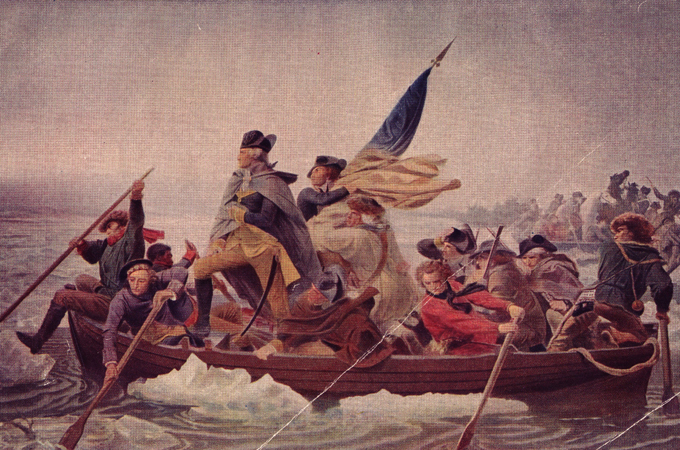
American Revolution
North American colonies fight for independence.
Introduction
Many North American colonists had left Europe to escape religious persecution or debts or to find work. Settlers came from England, Scotland, Germany, the Netherlands, France and Ireland.
Of course, not all immigrants came willingly. During the 17th and 18th centuries, millions of Africans were forced on to ships and transported to North America as slaves.
Life in the colonies was different from life in Europe. Colonists were proud to be independent farmers, artisans and merchants. They depended on themselves and on their own hard work and ambition. In the newly settled lands of North America, inherited privileges had little meaning.
The American Revolution (1754–1781)
Causes of the Revolution:
Ø Mercantilism
Mercantilism was an economic theory predominant in the 1700s that stipulated that nations should amass wealth in order to increase their power. Under mercantilism, the European powers sought new colonies in the Americas, Africa, and Asia because they wanted sources of cheap natural resources such as gold, cotton, timber, tobacco, sugarcane, and furs. They shipped these materials back to Europe and converted them into manufactured goods, which they resold to the colonists at high prices.
Ø French and Indian War
By the early 18th Century, the colonies had begun to expand westward. This expansion eventually brought them into conflict with French settlers, who were moving south from Canada along the Ohio River. TheBritish wanted to take over French land in North America, as they were interested in taking over the fur trade in the French held territory.
This war was fought between the years 1754 and 1763. It was called the French and Indian War because the Indians (Native Americans) helped the French in the war against the British. They had nothing to los: the British were taking their land, the French were not. In Europe, it was known as the Seven Years War.
In 1763, England defeated France, and Canada became an English possession. The wae in North America was won largely with English troops and ships, and was paid for with English taxes. The English government, thus, had high expenses and large debts and decided that the increasingly prosperous colonies should share the costs of war and administration. England began to enforce old laws more strictly and to pass new laws to raise colonial taxes.
ØThe Proclamation of 1763
Signed by King George III of England, The Proclamation of 1763 prohibited any English settlement west of the Appalachian mountains and required those already settled in those regions to return east in an attempt to ease tensions with Native Americans. While Britain did not intend to harm the colonists, many colonists took offense at this order.
Ø Acts of Parliament
1764 - Sugar Act:
This act put a three-cent tax on foreign refined sugar and increased taxes on coffee, indigo, and certain kinds of wine. It banned importation of rum and French wines. These taxes affected only a certain part of the population, but the affected merchants were very vocal. Besides, the taxes were enacted (or raised) without the consent of the colonists. This was one of the first instances in which colonists wanted a say in how much they were taxed.
1764 - Currency Act
Parliament argued that colonial currency had caused a harmful devaluation to British trade. They banned American assemblies from issuing paper bills or bills of credit.
1765 - Quartering Act
The Quartering Act was established on March 24, 1765. The King sent lots of British troops to Boston. The colonists had to house and feed the British troops. If the colonists didn't do this for the British troops, they would get shot.
The act was particularly resented in New York, where the largest number of reserves was quartered, and outward defiance led directly to the Suspending Act as part of the Townshend legislation of 1767. After considerable tumult, the Quartering Act was allowed to expire in 1770. An additional quartering stipulation was included in the Intolerable Acts of 1774.
1765 - Stamp Act
In March, the Stamp Act was passed by the English Parliament imposing the first direct tax on the American colonies, to offset the high costs of the British military organization in America. Thus for the first time in the 150 year old history of the British colonies in America, the Americans will pay tax not to their own local legislatures in America, but directly to England.
Under the Stamp Act, all printed materials were taxed, including; newspapers, pamphlets, bills, legal documents, licenses, almanacs, dice and playing cards. The American colonists quickly united in opposition, led by the most influential segments of colonial society - lawyers, publishers, land owners, ship builders and merchants - who were most affected by the Act, which was scheduled to go into effect on November 1.
In July, the Sons of Liberty, an underground organization opposed to the Stamp Act, was formed in a number of colonial towns. Its members used violence and intimidation to eventually force all of the British stamp agents to resign and also stop many American merchants from ordering British trade goods.
1767 - Townshend Acts
Series of 1767 laws named for Charles Townshend, British Chancellor of the Exchequer (Treasurer). These laws placed new taxes on glass, lead, paints, paper, and tea. Colonial reaction to these taxes was the same as to the Sugar Act and Stamp Act, and Britain eventually repealed all the taxes except the one on tea.Smugglers increased their activities to avoid the tax leading to more troops in Boston.
In the same series of acts, Britain passed the Suspension Act, which suspended the New York assembly for not enforcing the Quartering Act.
To prevent violent protests, Massachusetts Governor Thomas Hutchinson requested assistance from the British army, and in 1768, four thousand redcoats landed in the city to help maintain order. Nevertheless, on March 5, 1770, an angry mob clashed with several British troops. A group of men started antagonizing British troops. Someone yelled “fire” and the Red Coats (what the British soldiers were called) shot.
Five colonists were killed. These were the first Americans killed in the War for Independence. News of the Boston Massacre quickly spread throughout the colonies.
1773 - Tea Act
In 1773, Parliament passed the Tea Act, granting the financially troubled British East India Company a trade monopoly on the tea exported to the American colonies. In many American cities, tea agents resigned or cancelled orders, and merchants refused consignments in response to the unpopular act. Governor Hutchinson of Massachusetts, determined to uphold the law, ordered that three ships arriving in Boston harbour should be allowed to deposit their cargoes and that appropriate payments should be made for the goods. On the night of December 16, 1773, while the ships lingered in the harbour, sixty men boarded the ships, disguised as Native Americans, and dumped the entire shipment of tea into the harbour. That event is now famously known as the Boston Tea Party.
1774 - Intolerable Acts
The Intolerable Acts were laws that were really punishments that King George III put on the colonies. He did this to the Colonists because he wanted to punish them for dumping tea into the harbour at the Boston Tea Party. The Quakers petitioned King George to repeal or end the acts, but he said that the colonies must submit to these English laws.
These were the Intolerable Acts:
• The Boston Port Bill became effective on June 1, 1774. The King closed Boston Harbour to everything but British ships.
• The Quartering Act was established on March 24, 1765. The King sent lots of British troops to Boston. The colonists had to house and feed the British troops. If the colonists didn't do this for the British troops, they would get shot.
• The Administration of Justice Act became effective May 20, 1774. British Officials could not be tried in colonial courts for crimes. They would be taken back to Britain and have a trial there. That left the British free to do whatever they wanted in the colonies and to the Colonists.
• Massachusetts Government Act became effective on May 20, 1774. The British Governor was in charge of all the town meetings in Boston. There would no more self-government in Boston.
• The Quebec Act was established on May 20, 1774. This bill extended the Canadian borders to cut off the western colonies of Connecticut, Massachusetts and Virginia.
Ø First Continental Congress (1774)
To protest the Intolerable Acts, prominent colonials gathered in Philadelphia at the First Continental Congress in autumn of 1774. They once again petitioned Parliament, King George III, and the British people to repeal the acts and restore friendly relations. For additional motivation, they also decided to institute a boycott, or ban, of all British goods in the colonies. Militias (citizen soldiers) were set up.
Ø Lexington and Concord (1775)
On April 19, 1775, part of the British occupation force in Boston marched to the nearby town of Concord, Massachusetts, to seize a colonial militia arsenal. Militiamen of Lexington and Concord intercepted them and attacked. The first shot—the so-called “shot heard round the world” made famous by poet Ralph Waldo Emerson—was one of many that hounded the British and forced them to retreat to Boston. Thousands of militiamen from nearby colonies flocked to Boston to assist.
Ø Second Continental Congress (1775)
In the meantime, leaders convened the Second Continental Congress to discuss options. In one final attempt for peaceful reconciliation, the Olive Branch Petition, they professed their love and loyalty to King George III and begged him to address their grievances. The king rejected the petition and formally declared that the colonies were in a state of rebellion.
The Second Continental Congress chose George Washington, a southerner, to command the militiamen besieging Boston in the north. They also appropriated money for a small navy and for transforming the undisciplined militias into the professional Continental Army. Encouraged by a strong colonial campaign in which the British scored only narrow victories (such as at Bunker Hill), many colonists began to advocate total independence as opposed to having full rights within the British Empire.
Ø Common Sense
Common Sense was written by Thomas Paine and published in January of 1776. This document was one of many revolutionary pamphlets that was famous during that time. It advocated complete independence of Britain and it followed the natural rights philosophy of John Locke, justifying independence as the will of the people and revolution as a device for bring happiness. These words inspired the colonists and prepared them for the Declaration of Independence, although the thoughts were not original.
Benjamin Rush, the Philadelphia physician, encouraged Paine, while Paine was writing the pamphlet. Rush read the manuscript, secured the criticism of Benjamin Franklin, suggested the Title, and arranged for its anonymous publication by Robert Bell of Philadelphia. Common Sense was an immediate success. Paine estimated that not less than one hundred thousand copies were run off, and he bragged that the pamphlet's popularity was beyond anything since the invention of printing. Everywhere it aroused discussion about monarchy, the origin of government, English constitution ideas, and independence.
He challenged the idea that democracy is the best form of government:
"The demagogues to seduce the people into their criminal designs ever hold up democracy to them.... If we examine the republics of Greece and Rome, we ever find them in a state of war domestic or foreign.... Apian's history of the civil wars of Rome, contains the most frightful picture of massacres.... that ever were presented to the world."
And he reminded readers of all that Britain had done for them:
"The people of England, encouraged by the extension of their laws and commerce to those colonies, powerfully assisted our merchants and planters, insomuch that our settlements increased rapidly.... It may be affirmed, that from this period, until the present unhappy hour; no part of human kind, ever experienced more perfect felicity. Voltaire indeed says that if ever the Golden Age existed, it was in Pennsylvania."
The Declaration of Independence

Finally, on July 4, 1776, the Continental Congress declared the 13 American colonies to be the independent United States of America. The Declaration of Independence claimed that the English King, George III, had harmed his American subjects in a dozen of ways: “He has plundered our seas, ravaged our Coasts, burnt our towns, and destroyed the lives of our people.” The declaration went on to state that any nation, when treated so unjustly, has the right to make itself free and to create a new government.
Thomas Jefferson, a young lawyer from Virginia, drafted the Declaration of Independence. Arguments were based on John Locke's contract theory of government:
a) All people have natural rights ("Life, liberty, and the pursuit of happiness")
b) When a government abuses rights, the people have a right to "alter or abolish" it
c) King George has acted tyrannically. Long list of wrongs done by King to colonists.
d) The colonies are independent The United States was born.
Subscribe to:
Posts (Atom)